Auto repair and parts store
Wrench Press Auto
A repair shop that had moved premises and a web presence that had not. New site, logo, full parts store, domain email, and every listing on the internet reconciled.
Work
Every one of these is online and built on the same stack your site would be. Click any of them to see the whole thing.
Every site so far
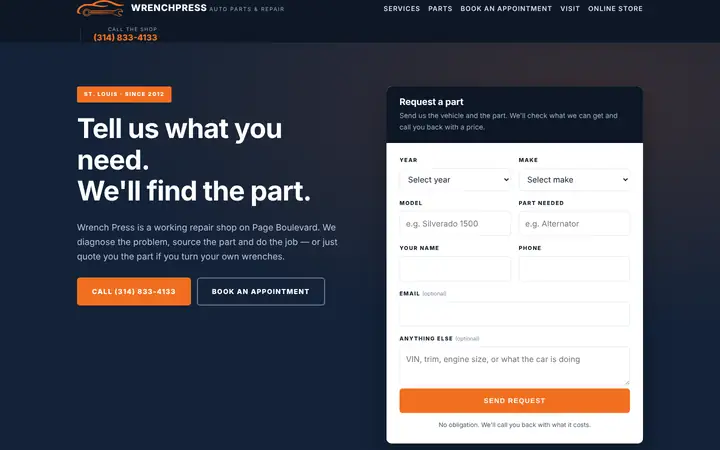 Wrench Press Auto (opens in a new tab)
Auto repair & parts store
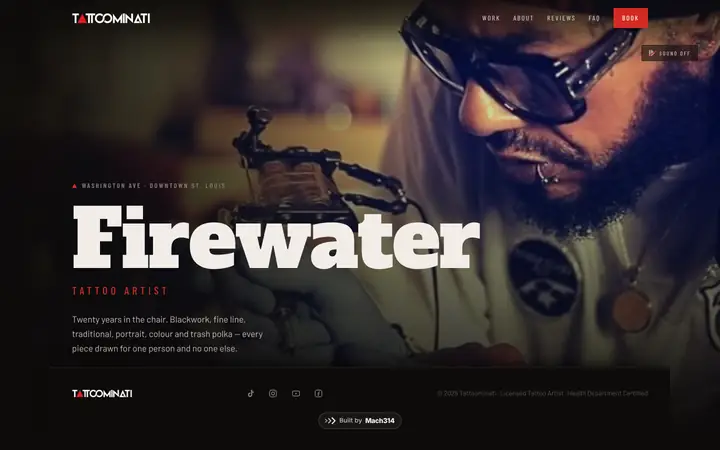 Tattoominati (opens in a new tab)
Tattoo studio
 Concept
Kim Stahl Designs (opens in a new tab)
Jeweler & knifemaker
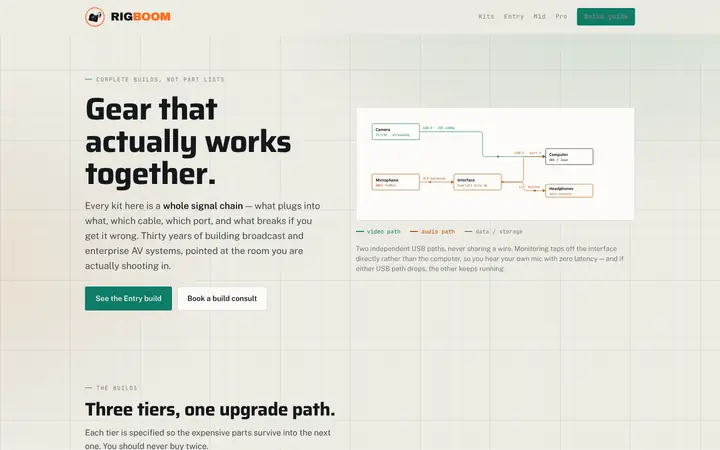 Rigboom (opens in a new tab)
Online store
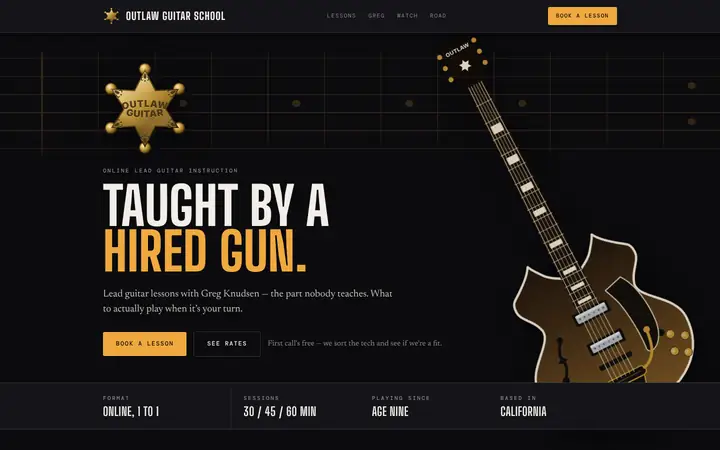 Outlaw Guitar School (opens in a new tab)
Online guitar lessons
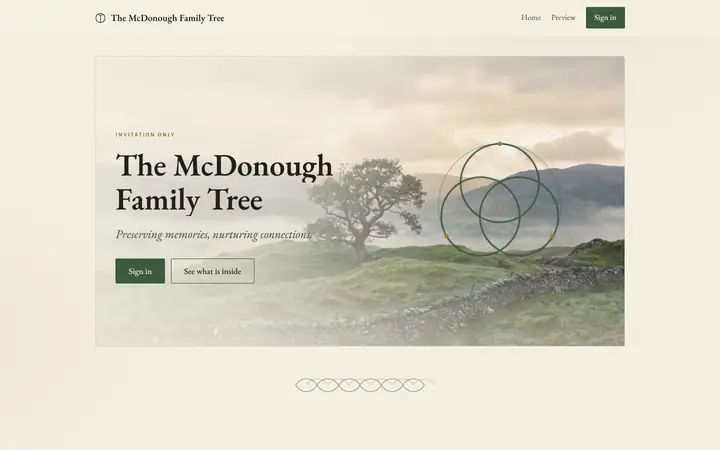 The McDonough Family Tree (opens in a new tab)
Private family archive
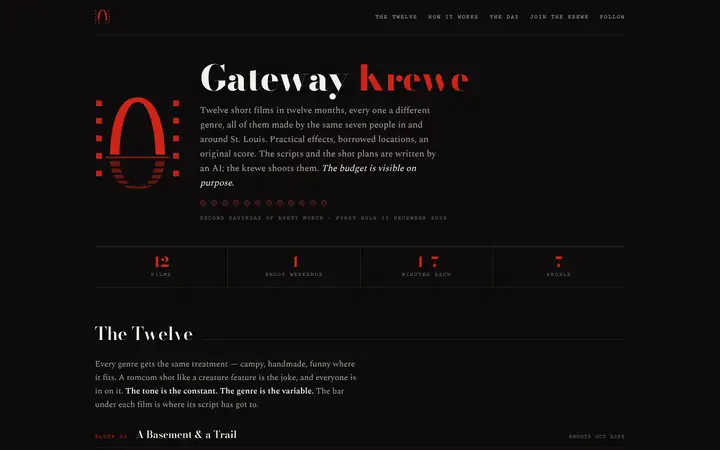 Gateway Krewe (opens in a new tab)
Indie film collective
 Locomotion Digital (opens in a new tab)
Podcast & video studio
 Concept
Tree of Elements (opens in a new tab)
Crystal & gemstone shop
 Micah Pokorney (opens in a new tab)
Professional portfolio
Tiles marked “Concept” are designs built for a business before they signed on — live, but not yet theirs.
Auto repair and parts store
A repair shop that had moved premises and a web presence that had not. New site, logo, full parts store, domain email, and every listing on the internet reconciled.
Online store
Creator equipment kits sold as complete bundles. Every kit total is summed from its line items at build time, so a price can never be stale or wrong.
Studio and bookings
Fifty-two piece portfolio with a video hero of the artist actually working. Built so bookings are the only thing the visitor can do next.
Studio services
Content studio and workshop programme. Deliberately publishes no rates or address until those are confirmed — the build fails if a price appears.
Professional site
Animated network-topology identity for a telecom engineer. Proof that a one-person site does not have to look like a template.
Each page is a real file, built once and served from a global network. There is no database powering the page, no plugin that needs patching, and no admin login to be broken into. The most common way a small-business site gets hacked simply does not exist here.
No page builder, no tracking pile, no fifteen fonts. A typical page here is a few dozen kilobytes. That matters most on a phone on a bad signal, which is where your customer is standing.
Every site runs an automated check before it can be published: every internal link resolves, every page has a title and description, there is exactly one main heading, and the mobile gutter is measured rather than assumed. If any of that fails, the site does not publish. These are not hypothetical — each check exists because that exact bug once shipped.
Every site lives in a version-controlled repository. Every change is recorded, and any version can be restored. If I vanished tomorrow, another developer could pick it up and understand it.